You probably anticipate a strong caffeine rush when you purchase a shot of espresso at Starbucks, and with good reason. Espresso is renowned for being a potent, concentrated type of coffee. However, what is the precise amount of caffeine that each shot from Starbucks contains? Knowing espresso’s caffeine level can help you make better decisions whether you’re attempting to control your daily caffeine intake, selecting the ideal beverage for a boost, or you’re just curious.
In this manual, we’ll explore:
- The average amount of caffeine in Starbucks espresso
- Changes according to shot size and roast
- Caffeine-related factors
- A table for comparison
- Typical queries (FAQs)
- Conclusion and practical suggestions
Caffeine Content in a Starbucks Espresso Shot
Based on Starbucks’ own nutrition data and other reliable sources, the caffeine amount of Starbucks espresso is broken down as follows:
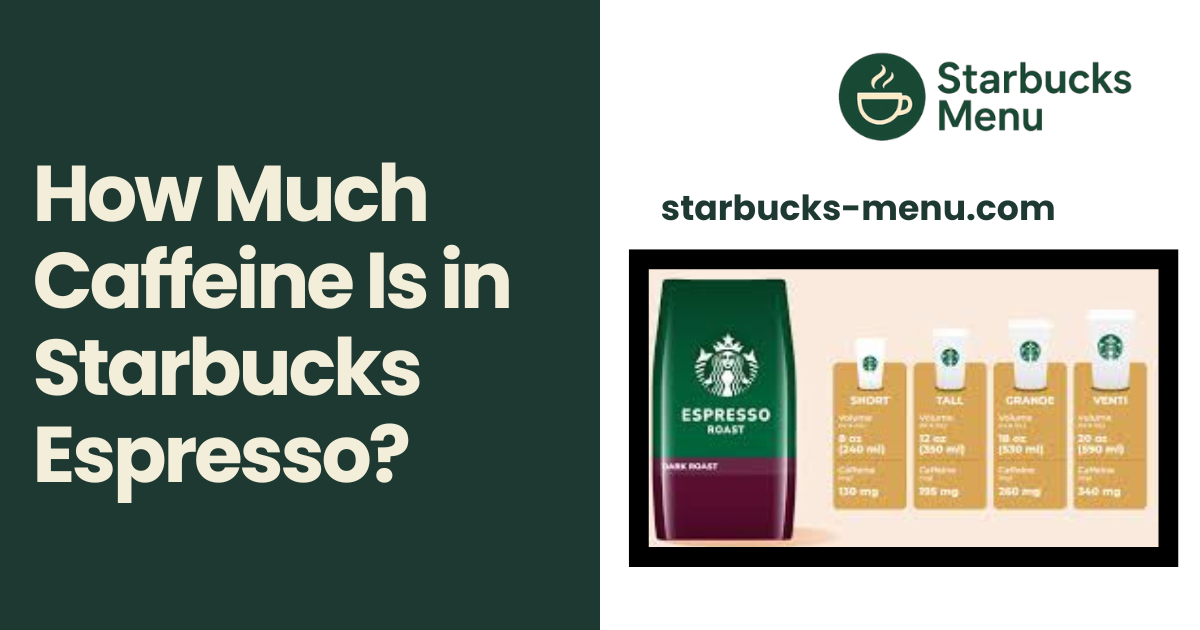
- There are about 75 mg of caffeine in a single (solo) Starbucks espresso shot.
- A single shot of their Blonde espresso roast has about 85 mg of caffeine.
- According to multiple sources, each shot of decaf espresso has just about 10 mg of caffeine.
- These are estimates; the actual amount of caffeine may differ significantly based on the specific bean blend or how the shot is drawn.
How Caffeine Varies by Shot Size
Starbucks offers different “sizes” of espresso shots, and the total caffeine scales with the number of shots:
These numbers align with Starbucks’ standard shot sizes.
What Influences Your Espresso’s Caffeine Content
Even in a highly standardized chain like Starbucks, a number of factors can affect the amount of caffeine in your espresso shot:
Level of Roast
- Blonde and other lighter roasts typically have a marginally greater caffeine content.
- Because of the roasting process, dark roasts may contain slightly less caffeine per volume.
Shot Style and Extraction Time
- Although the flavor of the “ristretto” shot (shorter extraction) is more concentrated, the amount of caffeine doesn’t necessarily decrease proportionately.
Brewing Grounds
- Flavor may be diluted by a longer pull (more water); however, caffeine extraction may not alter linearly.
Size of Grind
- More surface area is exposed by a finer grind, which may boost extraction (including caffeine).
Bean Type
- Starbucks primarily uses high-quality Arabica beans, which have a different caffeine profile than Robusta. espressoandmachines.com
Comparing Caffeine in Different Starbucks Espresso-Based Drinks
The amount of caffeine in your drink doesn’t just depend on shot size it also depends on the drink type. Here are some typical examples (using espresso as the base):
Americano
- Tall: ~75 mg (1 shot)
- Grande: ~150 mg (2 shots)
- Venti (hot): ~150 mg (2 shots)
- Venti (iced): ~225 mg (3 shots) Grounds to Brew
Latte / Cappuccino / Macchiato
- Tall (12 oz): 1 shot → ~75 mg
- Grande (16 oz): 2 shots → ~150 mg
- Venti (hot): 2 shots → ~150 mg
- Venti (iced): 3 shots → ~225 mg
Flat White
- Uses ristretto (shorter) shots, which may feel more intense; caffeine is still significant. Grounds to Brew
Decaf Drinks
- If you order a decaf espresso-based drink, each espresso shot adds ~10 mg (or a bit more/less).
- So, a “Grande decaf latte” (2 decaf shots) would have roughly ~20 mg of caffeine.
Health & Safety: How Much Is Too Much?
- The FDA and other health experts generally recommend a daily caffeine limit of about 400 mg for most healthy adults. King Of Kings +1
- That means just 4 regular (signature roast) espresso shots would hit ~300 mg, which is already a significant portion of that daily limit.
- Be cautious if you:
- Are sensitive to caffeine
- Are pregnant (who often have lower recommended limits)
- Have heart or sleep concerns
Conclusion – Starbucks Espresso
Starbucks espresso packs a solid caffeine punch. A single shot of their standard (Signature) espresso typically has around 75 mg, while their Blonde roast shot has about 85 mg, and decaf shots are very low in caffeine (~10 mg). Depending on how many shots you take in your drink, you can easily tailor your caffeine hit—but it’s also important to be aware of your daily limits, especially if you’re sensitive to caffeine.
Knowing these numbers helps you make smarter choices—whether you want a gentle lift in the morning, a midday pick-me-up, or a more controlled caffeine intake. So next time you order, you know exactly how “strong” your espresso really is.
FAQs (Frequently Asked Questions)
Q1. Does a Blonde espresso shot always have more caffeine than a Signature shot?
A: Usually yes Blonde espresso has ~85 mg per shot, while a Signature roast shot has ~75 mg. Grounds to Brew But the difference is not huge, and other factors (like extraction) also play a role.
Q2. Can I reduce caffeine by asking for a “half-caff” or “decaf” shot?
A: Yes. Decaf espresso shots at Starbucks contain very little caffeine (around 10 mg per shot, according to some sources). Brew That Coffee
Q3. Is ristretto or long shot more caffeinated?
A: Not necessarily. Ristretto is more concentrated in flavor because it’s a shorter pull, but caffeine doesn’t always scale exactly with volume. Grounds to Brew
Q4. How many espresso shots can you put in a Starbucks drink?
A: It depends on the drink size and store policy, but typically you can add multiple shots. Just be aware of how much caffeine you’re consuming. (E.g., 4 shots = ~300 mg for Signature roast.)
Q5. Can the caffeine number vary between Starbucks stores?
A: Slightly, yes. While Starbucks tries to standardize its espresso, factors like machine calibration, barista technique, or bean batches can cause small variations. Coffee Talkies